
Is the AI Boom Becoming a Bubble? Elon Musk’s Warning Raises Bigger Questions
Published
Artificial intelligence has a very physical appetite: chips, electricity, buildings—and money. The question is whether the businesses funding that infrastructure can earn enough to pay for it.
The technology can be useful while some of the investments surrounding it prove unsustainable. That distinction matters more than any dramatic prediction.
What Musk actually warned about
Reuters reported on October 26, 2026 that Elon Musk predicted consolidation and failures among “neoclouds,” specialist cloud providers serving AI customers. He also said SpaceX would not acquire those companies. This was a prediction about a particular business sector, not proof that artificial intelligence itself is headed for collapse. [1]
His comments also came in the context of his own infrastructure financing: Reuters reported on October 25 that Musk said SpaceX had closed a $40 billion GPU debt deal. Reuters cautioned that the meaning of “closed,” including whether investors had agreed pricing, was unclear from his post. Musk’s statements are therefore relevant industry commentary, not an independent verdict on competitors’ finances. [2]
CoreWeave and the debt behind the build-out
CoreWeave rents AI computing capacity. Expanding that business requires paying for infrastructure before collecting all the revenue it is expected to generate.
On October 15, Reuters reported that CoreWeave had about $50 billion in debt. Its subsequent explainer attributed that figure to LSEG data. This is a dated reported estimate, not a claim that APPZUZU independently audited the company’s current balance sheet. [3][4]
Reuters also reported the company’s counterargument: CEO Mike Intrator told employees that its contract backlog more than covered debt obligations. Nvidia CEO Jensen Huang expressed confidence in CoreWeave’s financial strength. [3]
Those responses belong in the story alongside the concerns. A large backlog supports the demand case, but it is not the same as cash already collected or profit already earned. Delivering contracts still costs money.
Where TYT fits
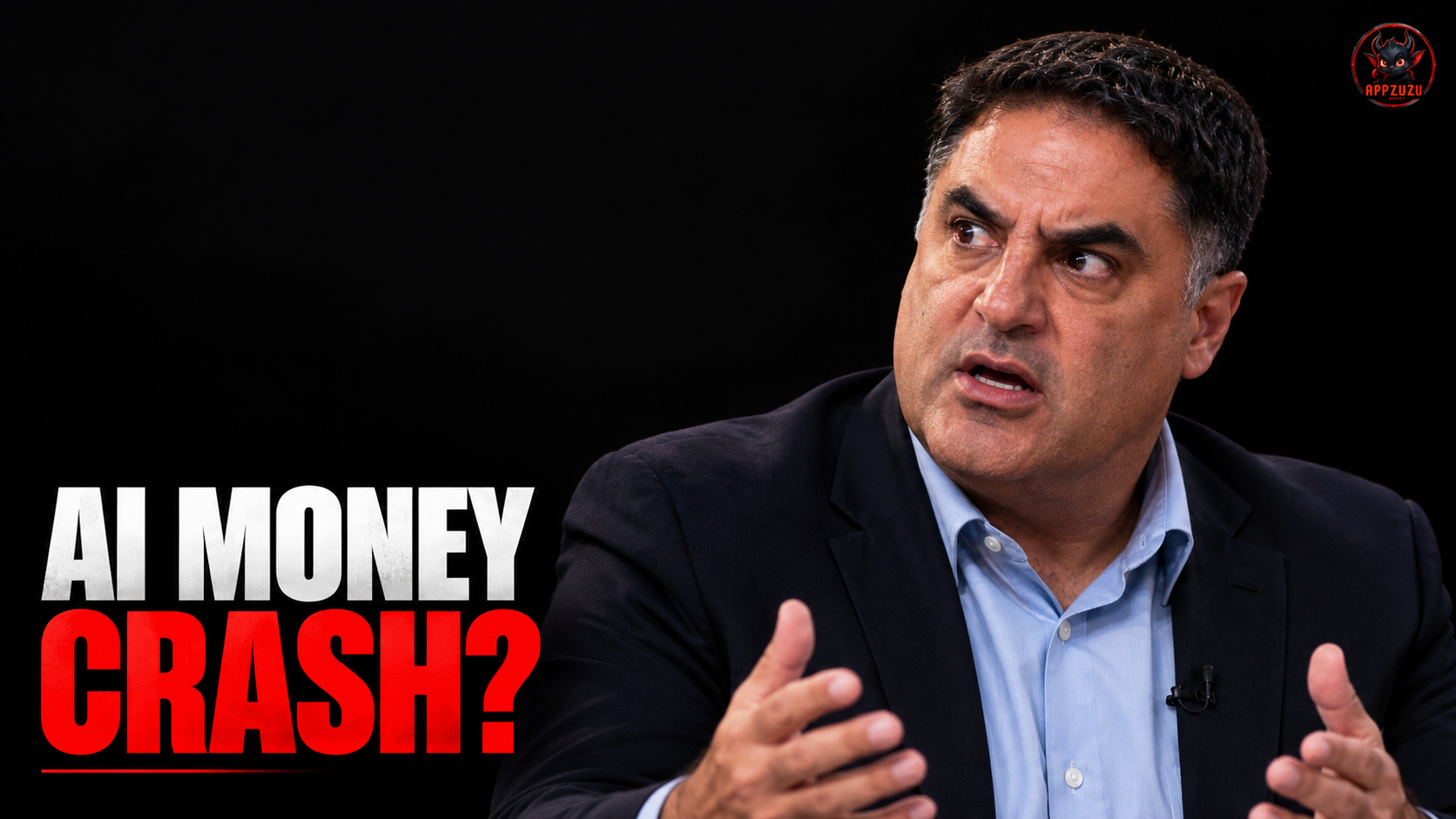
The Young Turks addressed the debate in a segment titled Elon Musk Sounds Alarm On The AI Bubble. The published segment description identifies Cenk Uygur and Ana Kasparian as discussing financing concerns. That description establishes the topic; the hosts’ interpretation should be treated as commentary, rather than evidence that a crash is inevitable. [5]
APPZUZU’s financial claims here rely on the reporting linked below, not on treating the segment’s headline as a factual conclusion.
Is this another dot-com bubble?
The dot-com comparison offers a useful possibility: a technology can transform society even when investors overpay for individual businesses built around it.
It remains an analogy, not a forecast. Neither impressive AI capabilities nor warnings about excessive borrowing settle the investment question on their own.
Five things worth watching
- Cash flow: Can operations generate cash after ongoing costs?
- Debt: When must borrowing be repaid or refinanced, and at what cost?
- Customer economics: Does demand translate into profitable revenue?
- Equipment life: How does replacement spending affect returns?
- Business value: Are customers receiving measurable benefits that support repeat spending?
These are questions for evaluating business resilience, not a recommendation to buy or sell a security.
The APPZUZU perspective
Our view: technological potential and financial sustainability deserve separate scrutiny. Some AI businesses may build durable advantages; others may discover that demand alone cannot rescue weak economics.
The useful question is not simply whether AI has a future. It is which business models can afford to deliver it.
Explore APPZUZU AI News, educational resources, and Apps & Tools.
APPZUZU | AI Knowledge. AI Tools. Real Opportunities.
Sources
- Reuters, October 26, 2026: Musk’s grim outlook hits neoclouds as debt concerns mount
- Reuters, October 25, 2026; updated October 26: Musk says SpaceX raised $40 billion in debt deal, predicts neocloud shakeout
- Reuters via Investing.com, October 15, 2026: CoreWeave’s slump spotlights growing burden of debt behind AI boom
- Reuters via Investing.com, October 15, 2026; updated October 16: Why CoreWeave’s troubles are rattling the AI boom
- TYT segment listing and description, The News Access · YouTube segment